Running form and your spine
Cadence, stride, and posture — how the way you run reaches all the way up to your neck.
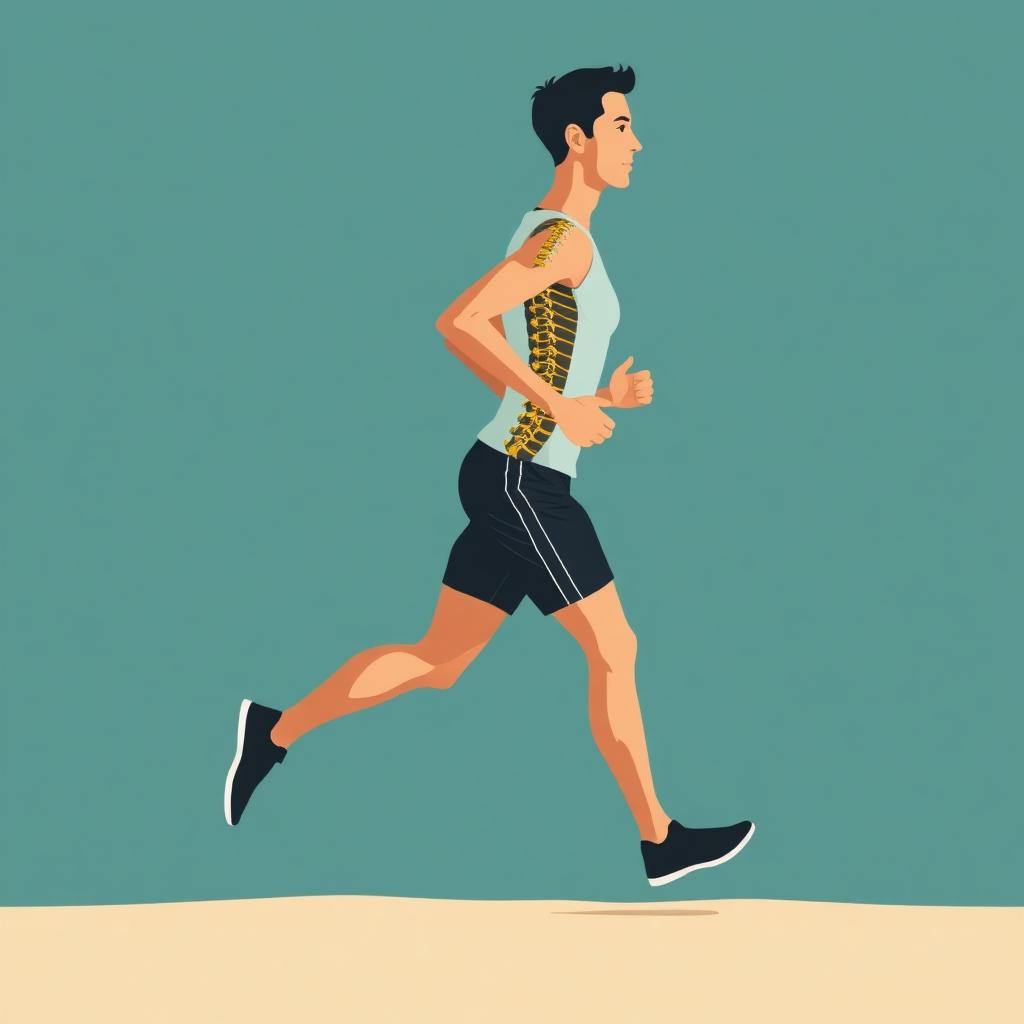
Runners obsess over shoes and mileage. They rarely think about the spine — until something up top starts hurting. But the way you strike the ground travels all the way to your neck, and small form tweaks pay off in fewer aches and faster recovery.
Cadence: the single biggest lever
Cadence is how many steps you take per minute. Most recreational runners land somewhere between 155–170 spm and would benefit from bumping it toward 175–180.
Why it matters: at lower cadences, you tend to overstride — landing with your foot far in front of your center of mass. That sends a bigger braking impact up through the knee, hip, and lumbar spine every step. Bumping cadence by 5–10% shortens your stride, brings the foot under you, and cuts impact loading dramatically.
How to test it: Run at your usual easy pace and count right-foot strikes for 30 seconds. Multiply by 4. If you're under 170, try running to a 175–180 bpm playlist or metronome for a week and see how it feels.
Posture: run tall, lean from the ankles
Imagine a string pulling the crown of your head skyward. Ribs stacked over hips. Slight forward lean should come from the ankles, not the waist. Waist-bending collapses the diaphragm and jams the lumbar spine into extension.
Arms: relaxed, driven back
Your arms set your legs' rhythm. Keep elbows at ~90°, hands unclenched, and drive the elbows backward rather than punching forward. Cross-body arm swing rotates the thoracic spine and torques the low back — keep the motion front-to-back.
Head and gaze
Eyes on the horizon, not on your feet. Looking down pulls the head forward and multiplies neck load with every stride.
When the spine sends signals
Post-run stiffness in the low back or neck is often about hip mobility and thoracic rotation, not the spine itself. Two drills to try:
- 90/90 hip switches — 2 sets of 10 per side before runs
- Thoracic open-book — 2 sets of 8 per side after runs
Should runners get adjusted?
Many endurance athletes find that regular chiropractic care helps maintain thoracic and hip mobility — key for keeping the low back happy over high-volume training weeks. Pair adjustments with strength work; passive care alone won't fix a form issue.
Educational information reviewed by operators of The Joint Chiropractic Rosemead — not medical advice. Always consult a licensed clinician for your specific situation.
Ready to feel better? Book a $29 intro visit.
$29 New Patient Special — exam, consult & first adjustment. No appointments needed. No insurance required. Open evenings & weekends.